The 7th R.O.C. ( Taiwan )Presidential Innovation Award Report_Group Category_Realtek Semiconductor Corp.



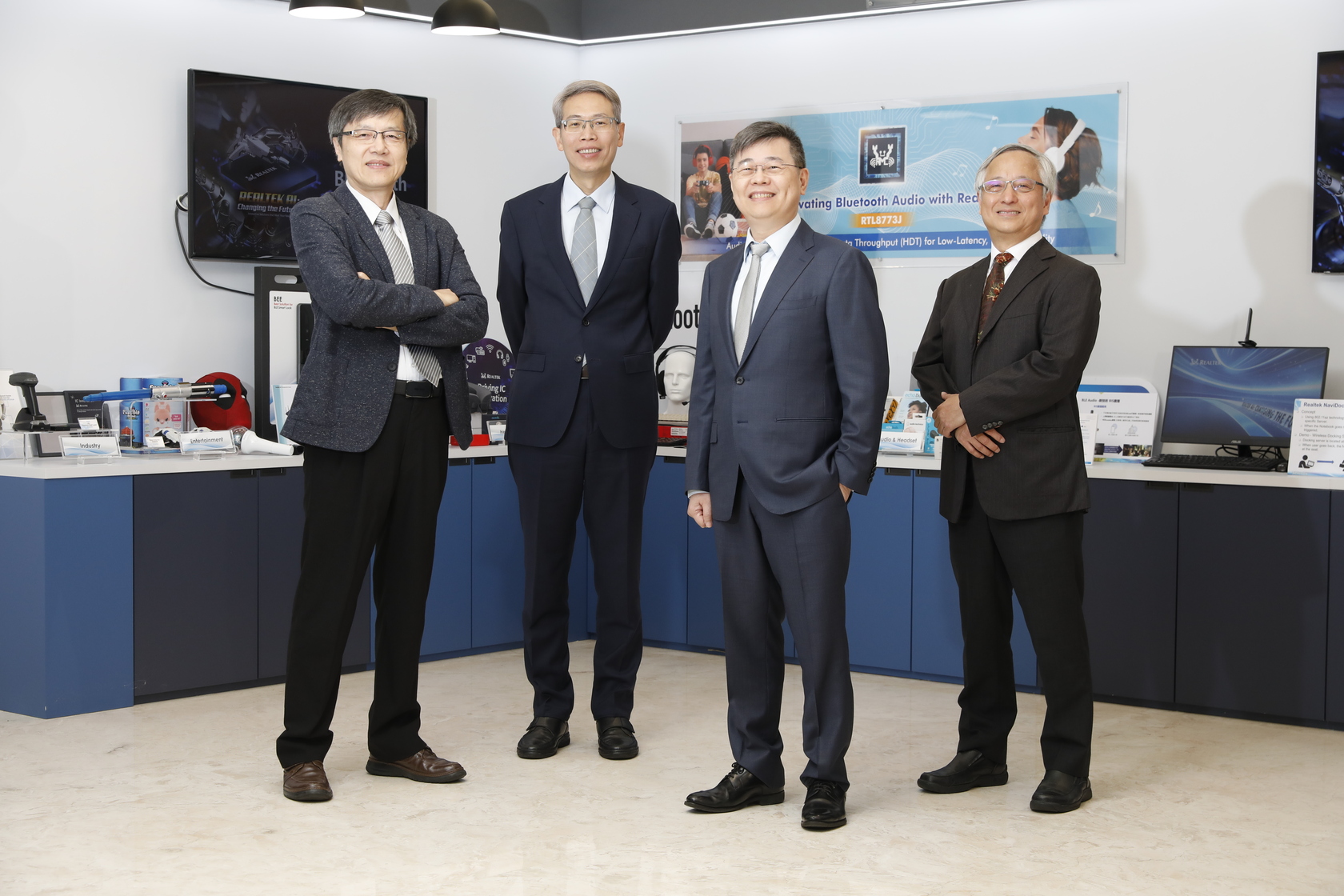
Realtek Semiconductor Corp.
Group Category
The Crab Spirit Upgraded: Forging the Digital World’s Neural System through Lateral Innovation
After nearly 40 years in the semiconductor industry, Realtek’s chips have powered devices around the world and enabled the interactions among humans, machines, and networks that form an invisible yet pervasive digital neural system. Driven by strong R&D capabilities and a commitment to technological autonomy, Realtek has transformed from "adapting to the market" to becoming a key force capable of "defining the market".
Semiconductors underpin modern digital life, enabling seamless connectivity across machine-to-machine and human-to-machine interactions. Realtek is a primary enabler of this infrastructure.
Recognized by its iconic crab logo, Realtek has spent decades upgrading communication and multimedia technologies. Over time, it has built a comprehensive portfolio spanning network infrastructure, audio-visual systems,and smart edge devices.
While the brand often operates behind the scenes, its chips are ubiquitous in daily life, from laptop connectivity and video conferencing to electric vehicles.
Originally a specialist in networking chips, Realtek Semiconductor Corp. has expanded into Wi-Fi, Bluetooth, audio and multimedia technologies, as well as emerging fields such as AIoT, automotive systems, and robotics. The company now ranks among global leaders in network communications, audio processing, IP cameras, and AIoT solutions for home appliances.
Shipping over 2.5 billion chips annually, Realtek’s semiconductors are embedded in billions of devices worldwide. Their reach extends into critical infrastructure, including electronic voting systems in South American presidential elections and lottery systems in North America. This pervasive presence forms part of the modern world’s “digital neural system.”
3-in-1 Ethernet Chips: Entering the World Stage
Realtek’s journey began in 1987. While the founding team initially produced entry-level consumer electronics, such as Christmas light controllers, they soon recognized the need to aim high. As the networking era emerged, Ethernet became their primary focus.
thernet became their primary focus.In 1997, the company reached a defining milestone with the launch of the world’s first “3-in-1” Ethernet chip. By integrating analog, digital, and memory components into a single chip, Realtek commoditized what had previously been complex and costly. “This breakthrough disrupted the entire industry,” says Realtek’s President Kuang-Yu Yen.
This move not only challenged Intel’s market dominance, but also positioned Taiwan’s IC design sector as a global contender in networking. It laid the groundwork for a broader ecosystem, contributing to the rise of companies such as Accton and D-Link.
Yen notes that lower networking costs— made possible in part by Realtek — helped fuel the rise of tech giants like Google. “As connectivity became affordable for all, the digital world began to take shape,” he adds.
Realtek has leveraged its strengths in integration and power efficiency to drive the evolution of mainstream standards, from 100MbE and 1GbE to today’s 2.5GbE and 10GbE. Its products are oftentimes used by international standards bodies as golden samples for interoperability testing. This progression reflects Realtek’s shift from following markets to defining them.
Conviction of Technology Indepen dence: Securing Global Leadership
Following its Ethernet success, Realtek adopted a“broad coverage”strategy to scale its core technologies. Yen notes that while building a“digital neural system”is the long-term objective, expansion is deliberate — targeting high-volume markets where technologies can be effectively applied across sectors.
Starting with PC peripherals—including audio, Wi-Fi, Bluetooth, IP Camera and USB—Realtek expanded into consumer electronics, ranging from set-top boxes home appliances, Bluetooth earphones to wearables. With more than 2,000 product models, the breadth of its portfolio is unrivalled in the industry.
While many companies compete for market share, Realtek’s global leadership is rooted in its commitment to technical independence. Since its founding, the company has prioritized in-house R&D over off-the-shelf intellectual property. This approach allows Realtek to optimize its chips for size, speed, power efficiency, and cost, while maintaining the flexibility to adapt to evolving industry standards.Rather than supplying standalone components, it delivers comprehensive integrated solutions tailored to specific customer needs.
This strategy has enabled Realtek to expand across a wide range of global device markets, while supporting the growth of Taiwan’s networking and IT industries. By retaining control over its core technologies, the company reduces reliance on external supply chains and strengthens the resilience of criticalcomponents—an increasingly important factor in today’s geopolitical landscape.
Realtek continues to reinvest nearly 30% of itsb annual revenue into R&D. With more than 10,000 patents and a workforce in which nearly 90% are R&D professionals, the company also plays a key role in developing talent for Taiwan’s semiconductor ecosystem.
“This is how we build a competitive moat,” Yen says. “Sustained investment in R&D is essential to driving continuous innovation and breakthroughs.” This technical strength is not only a source of corporate advantage, but also a key contributor to Taiwan’s competitiveness in the global market.
A Decade of Sharpening a Sword:The Automotive “Spillover” Strategy
In 2014, while much of the industry remained focused on PCs and consumer electronics, Realtek identified the potential of automotive networking. At the time, in-vehicle communication relied on heavy, proprietary wiring that was difficult to diagnose and maintain. As the industry began shifting toward lighter architectures and open international standards, Ethernet emerged as a leading solution. Realtek applied its“spillover” strategy— leveraging its established Ethernet expertise to enter the automotive sector and actively participate in defining new global standards.
The transition was demanding. Safety requirements required a leap in reliability from parts per million (ppm) to parts per billion (ppb). Because automotive Ethernet operates under different specifications from those used in PCs, Realtek had to overhaul its R&D, design, and production processes. “We rebuilt the system from the ground up,” Yen notes. “It took nearly a decade of development before we reached high-volume production.”
Today, Realtek ranks among the world’s top five automotive Ethernet chipmakers and works with international automakers to shape future specifications. This success has brought Taiwan’s IC design industry more firmly into the core of the global automotive supply chain.
Other consumer technologies—such as WiFi, audio, cameras, and high-speed interfaces—were also made into automotive-grade solutions. This expansion broadened Realtek’s market reach and helped Taiwan’s ODM sector gain access to critical automotive subsystems, driving a broader national industrial upgrade.
An unexpected gain has emerged as major EV manufacturers expand into humanoid robotics.They have begun using Realtek’s hardware to connect robotic joints. By providing the “neural system” for these machines, Realtek’s Ethernet chips have secured a foothold in the humanoid robotics market.
Embedded AI: Transforming Daily Life Through Innovation
Realtek’s role is evolving alongside the rise of AI. While many industry leaders prioritize cloud data centers, Realtek is building on its extensive presence in on-premises devices to bring “edge AI” into everyday environments.
These applications range from voice recognition for human–machine interaction to automated 4K upscaling of low-resolution video, as well as enhanced imaging for outdoor cameras in low-light conditions. Realtek also provides AI-driven automation solutions for manufacturing. “By innovating at the edge—where our strengths lie—we enable industries across the board to benefit from AI,” Yen says.
Realtek’s track record of industry recognition reflects its technological evolution: from high integration to power efficiency, and now to AI innovation. Yet regardless of advances in AI computing, real-world applications continue to rely on high-speed transmission, high-resolution media interfaces, and seamless connectivity. In this sense, Realtek’s technologies form a critical foundation for bringing AI into practical use.
From the media and networking chips that connect people with AI, to the AIoT components that power smart appliances, and the Ethernet chips enabling autonomous vehicles and robotics, Realtek shows that semiconductors are more than hardware—they are enablers of everyday life. For Yen, this remains a source of professional pride. “Seeing the work of our engineers applied in everyday life is an immense honor,” he says.
Agile Adaptation: Symbiotic Success with Partners
Realtek’s success reflects the collective strength of Taiwan’s semiconductor ecosystem. “Taiwan’s comprehensive supply chain is a major advantage,” Yen says. By working closely with foundries as well as packaging and testing partners, Realtek builds deep collaborations to optimize manufacturing processes and packaging. This collaborative network has created a resilient industry cluster that remains difficult to replicate.
During the COVID-19 supply chain disruptions in 2020, Realtek demonstrated a high degree of flexibility. The company worked with manufacturing partners to maximize capacity utilization while developing high-performance alternatives. These solutions maintained full functionality without compromise, ensuring continuity for global customers during a period of uncertainty.
Realtek acted decisively when a shortage from an overseas supplier halted deliveries of critical USB Type-C power components for laptops. Although its own solution was still in the prototyping stage, the company dispatched engineers to the client’s site to redesign and validate the component. This rapid response prevented a supply bottleneck and helped lift Realtek’s market position in Type-C power components to near-leading levels.
Through agile execution and ecosystem support, Realtek has established itself as a reliable and standout supplier. Yen notes that these post-pandemic relationships have deepened significantly. “Many clients are now more collaborative, sharing their future product roadmaps readily so we can navigate upcoming market shifts together,” he says.
Elevating Sustainability: Unabating Carbon Emission Reduction Optimization
In keeping with ESG trends, Realtek has also embedded sustainability into its core design architecture. Internal assessments show thatmore than 90% of the company’s carbon footprint occurs during the end-user phase. To address this, Realtek focuses on efficiency at the source. By optimizing system architecture, precision circuitry, and power management, the company has achieved roughly a 30% reduction in carbon emissions with each product generation.
This commitment to green design has strengthened Realtek’s competitiveness while positioning it within the sustainable supply chains of major global brands.
Reflecting on Realtek’s nearly 40-year history, its crab logo serves as a metaphor for the company’s strategic evolution. Yen explains: low posture reflects humility in R&D; a hard shell represents resilience under pressure; strong claws signify the ability to seize opportunities; and moving in groups highlights the power of teamwork. Walking sideways, meanwhile, suggests the confidence of a company operating on the global stage.
This "Crab Spirit" captures Realtek’s ability to cultivate technology patiently and strike precisely, ultimately embedding its chips in billions of devices worldwide
The spirit is underpinned by a corporate culture built on “self-confidence and trust in people,” which Yen has recently expanded to include “innovation through collective intelligence.” This philosophy emphasizes the power of shared expertise in driving continuous progress and captures the essence of Taiwan’s technology industry.
Realtek’s story shows that even a single chip, when perfected, can have a global impact. Its journey to power smarter, more connected living continues.
Mantra for Success
- Since its founding, Realtek has maintained technical independence, reinvesting nearly 30% of its annual revenue into R&D. With more than 10,000 patents and a workforce where nearly 90% are R&D professionals, the company has built a strong competitive moat. This foundation enables Realtek to navigate industry shifts, define global standards, and achieve a world-beating track record.
- Realtek has expanded across networking, Wi-Fi, Bluetooth, automotive, and robotics. Its widespread presence forms part of the modern world’s “digital neural system,” while supporting the growth of Taiwan’s networking and IT industries and reducing reliance on external supply chains.
- The company maintains close partnerships with foundries and packaging/testing providers to optimize manufacturing processes and packaging. Each breakthrough product reflects a collective effort in innovation, strengthening Taiwan’s semiconductor ecosystem and industrial clusters.
得獎感言-Realtek Semiconductor Corp. Sun-Chien Chiu Chairman
Realtek's crab logo symbolizes the strength of collective collaboration. Grounded in integrity and R&D-driven sustainability, we continue to challenge ourselves as the market evolves. A culture of ‘self-confidence and trust in people’ is reflected in teams that serve as the driving force behind our growth.
Picture list
- Date of announcement:2026/06/01
- Last updated: 2026/07/22
- Views:99