
The 7th R.O.C. ( Taiwan )Presidential Innovation Award Report_Individual Category_National Tsing Hua University Chu-Chen Hsiao Professor, Center for General Education and College of Humanities and Social Sciences & Director



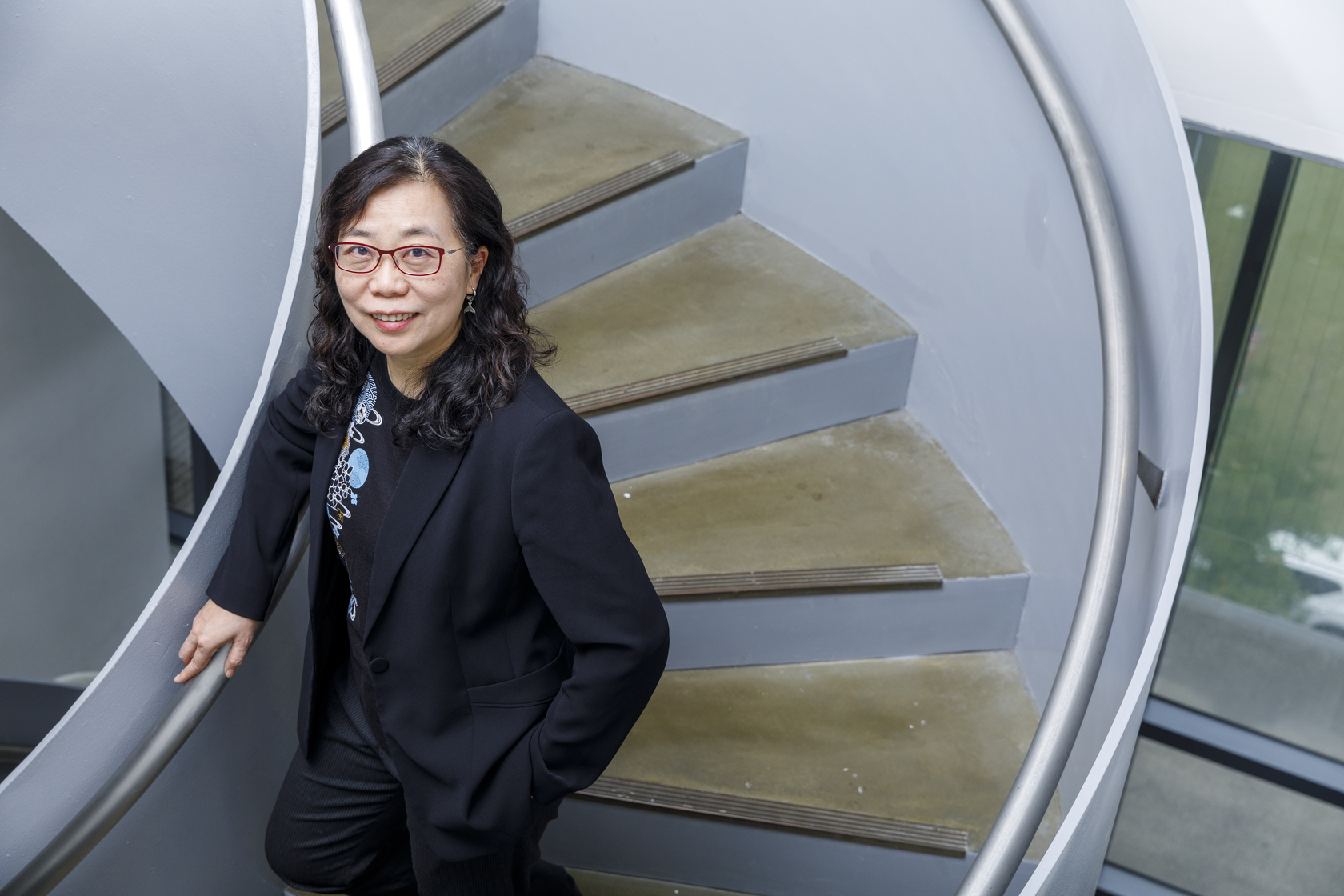
Chu-Chen Hsiao Professor, Center for General Education and College of Humanities and Social Sciences & Director
National Tsing Hua University
Individual Category
A Cinematic Chronicle of Taiwan’s Tech Rise
Since 1994, Director Chu-Chen Hsiao has used the documentary lens to bring back chapters of Taiwan’s history that were nearly lost. Working at the intersection of heritage, industry, and culture, she brings specialized subjects—those that have quietly shaped the nation’s path—into the public consciousness. For Hsiao, film is a way of preserving these stories and sharing them with a global audience, revealing the island’s hardships, its triumphs, and its enduring resilience.
Chu-Chen Hsiao is among the few documentary filmmakers in Taiwan who can bridge the narratives of history, industry, and culture. Over a career spanning more than 30 years, she has used film to bring the island’s overlooked struggles back into view, frame by frame.
Hsiao’s extensive body of work often explores subjects that are overlooked or seen as niche, yet remain central to Taiwan’s development. In Red Leaf Legend, she moves beyond the glory of youth baseball to reveal its realities. Grandma’s Hairpin traces the displacement and nostalgia of the first generation of veterans through her father’s life, while Our Time Our Story and Face Taiwan document the pioneers of New Taiwan Cinema. In The Dreamer, she captures the grassroots energy behind local revitalization in Chihshang, and On the Train—Taiwan’s first feature length railway documentary—revisits the shared memory of the railway.
Hsiao’s work brings overlooked stories to light, focusing on lives and experiences often left at the margins of a changing era. By piecing together these diverse histories, she traces the patterns of Taiwan’s social transformation and development, offering a clear way to understand the island’s modern identity.
Chu-Chen Hsiao didn’t follow the traditional path into film. After graduating with a degree in economics from National Tsing Hua University, she dove straight into documentaries in 1994. Her training in economics gave her a unique advantage: it taught her how to approach complex subjects with a logical mind, while her instinct for storytelling allowed her to connect deeply with her subjects.
For Hsiao, documentaries are a perfect way to observe society and communicate culture to a wider audience. She became the first director to win the Golden Horse Award for Best Documentary in two consecutive years, with Red Leaf Legend and Grandma’s Hairpin. She was also a pioneer who helped bring documentaries into mainstream theaters.
Bringing Semiconductors Home: “Failure Was Not an Option”
In June 2025, Hsiao reached a new milestone in her career with the release of A Chip Odyssey. The documentary, five years in the making and funded entirely through private support, traces how Taiwan’s semiconductor industry rose from its beginnings to become a global leader.
The film returns to the 1970s, when Taiwan faced mounting diplomatic pressure alongside a global oil crisis. It shows how the government partnered with Taiwanese scientists at home and abroad to launch the island’s first integrated circuit project. A group of 19 young engineers was sent to the United States to train with RCA, entrusted with the formidable task of bringing the foundations of the semiconductor industry back to Taiwan. Failure was not an option.
The film also highlights how TSMC later reshaped the industry by pioneering the world’s first dedicated foundry model. This helped turn Taiwan into a global manufacturing hub and an essential player in today’s technology landscape.
To make this film, Hsiao interviewed more than 80 veteran engineers and key figures across technology, policy, economics, and the environment. Through these in-depth conversations and careful historical research, she reconstructs the development of Taiwan’s semiconductor industry. By capturing the decisions, beliefs, and struggles of those involved, she turns what was once a high-stakes national gamble into a shared story for the entire country.
The idea for this project came to Hsiao during a memorial service for Hu Ding-Hua, former chairman of Macronix and a leader of the original RCA initiative. Listening to first-hand accounts from the first generation of engineers, she felt a growing urgency: such a foundational chapter of Taiwan’s history risked being forgotten.
A Tough Sell: Who Is the Audience?
Can I tell this story on film? Can I show people in Taiwan that the semiconductor industry is about more than share prices and career prospects? Is it tied to our national identity?” Hsiao wondered. “I want the world to see Taiwan’s value—and its very existence—through these chips.”
Hsiao set out to show how the industry became Taiwan’s “Silicon Shield.”Her aim was to document its long path—from those first uncertain steps to its emergence as a global leader.
When Hsiao first conceived the project, few believed in its potential. Some assumed it was a government-funded publicity effort or a corporate film for TSMC. Others argued the subject was unlikely to draw a wide audience—documentary viewers are not typically drawn to technology, while tech audiences rarely attend independent cinemas. Many felt such a specialized history should be left to the government to document.
Undeterred, her commitment to preserving this history only deepened. What began as a two-year plan extended into a fiveyear journey, as she navigated a shifting international landscape and worked to earn the trust of her interviewees.
“I believe hard work eventually meets the right opportunity,”Hsiao reflects. Amid geopolitical dynamics, a film once dismissed as unmarketable has arrived at the right moment. Its success echoes the industry it portrays—a story of finding a way under immense pressure and thriving even in the most challenging conditions.
Box Office Success
A Chip Odyssey opened to strong box office numbers in its first week. The film set a new record with more than 1,000 private screenings, quickly becoming one of the five highest-grossing documentaries in Taiwan’s history. Notably, many of the tech heavyweights featured in the film did not see the final cut until its premiere.
Before one screening, a tech CEO half jokingly told Hsiao,“In the tech world, we focus on the present and the future. You people in the arts tend to look back.” Hsiao replied calmly,“We don’t just look at the past. We consider the past, the present, and the future at once.”
As the screening ended and the house lights came up, Hsiao noticed the executive seated in the front row, his eyes red with emotion. When invited to speak, his tone had shifted completely.“Taiwan’s semiconductor success was built on the efforts of those who came before us,” he said. “The past, the present, and the future—they are all equally important.”
Work Behind the Lab Matters Too
During the making of A Chip Odyssey, ChinTay Shih—a semiconductor pioneer and former president of ITRI—served as both an interviewee and a key advisor. He noted that, in the past, younger audiences often showed little interest when he spoke about the industry’s history. He was struck by how the 106-minute film could make audiences laugh, cry, and leave the theater with a renewed sense of energy. Shih observed that Hsiao’s effort to bring the film to life was as demanding as the original challenge of developing semiconductor technology.
Having lived through those historic moments, Shih had never paused to reflect—until now. Through Hsiao’s storytelling, he came to see that the dedication of his generation has played a defining role in Taiwan’s decades-long development.
As a female director, Chu-Chen Hsiao has a knack for capturing the subtleties that often go unnoticed in male-dominated narratives. In the hands of a male director, the filming of Red Leaf Legend might have focused on the games themselves or the development of the sport, but Hsiao looked at the children’s lives once the spotlight had faded.
She brings this same inclusive perspective to the semiconductor industry. While most histories center on engineers and CEOs, A Chip Odyssey brings front-line female operators and accounting staff into the frame, giving them their rightful place in the industry’s evolution.
“If the mission to the U.S. was only about technology, sending engineers would have been enough,” Hsiao explains. “Sending accounting staff showed foresight—it meant there was a plan for business operations, systems, and long-term industrial growth.”
After one screening, an accounting executive approached Hsiao to thank her. “Industrial reports always focus on engineers,” she said. “Finally, someone sees that we contributed, too.”
Inward Reflection and Cultural Diplomacy
A Chip Odyssey has resonated not only at home but also internationally. Screened in 18 countries, the film has prompted foreign representative offices to seek screening rights through Taiwan’s Ministry of Foreign Affairs. A recent screening in Thailand drew ambassadors from multiple countries.
“We’ve held screenings at leading universities such as Stanford and Columbia, and members of the U.S. Congress have attended,” Hsiao says. International viewers often note that, while they were aware of Taiwan’s strength in semiconductors, the film helped them better understand the challenges the island faced in becoming what it is today.
Among the many stories that have stayed with Hsiao is an email from a manufacturer in Mexico. He wrote that, while he had long been aware of Taiwan’s capabilities in bicycles and semiconductors, he had never understood how such a small island had navigated a complex international landscape. He had always hoped to visit Taiwan, but now felt a strong need to come—this history of struggle, he said, was one his own country could learn from.
For Hsiao, bringing Taiwan’s story to the world is no longer about personal recognition; it has become a form of cultural diplomacy. Through her work, she hopes to show the world the resilience of the Taiwanese people, while encouraging her fellow citizens to look inward. “If we don’t value our own history and struggles,” she notes, “we cannot expect the world to recognize our worth.”
If A Chip Odyssey is a tribute to the pioneers of the semiconductor industry, then On the Train offers a more contemplative look at a largely forgotten chapter of Taiwan’s railway history and local memory.
Hsiao has a talent for uncovering universal human emotions within local stories. She spent six years filming On the Train, capturing the final days of the South-Link Line before its full electrification. The film documents the lives of those who operate, ride, and photograph the trains, alongside the stories of the engineers who built the tracks. Even the Taiwan Railways Administration once asked why she had traveled to the island’s southernmost tip for the project. For Hsiao, it is precisely because this history lies at the margins that it deserves to be seen and remembered.
Beyond the Bottom Line
In Hsiao’s view, the significance of the South Link Line extends far beyond completing Taiwan’s rail network. It stands as a testament to local ingenuity—the first major railway entirely surveyed, designed, and built by Taiwanese engineers. The film captures the challenges of tunneling through the rugged Central Mountain Range and features the final runs of the “Breezy Blue”, a nostalgic symbol of a bygone era.
The film’s impact was immediate, sparking renewed interest in the railway and drawing visitors even from South Korea. For Hsiao, this impact matters far more than box office rankings or social media attention. A route once seen as remote and quiet has, through her work, become a shared point of connection that transcends language and borders.
“There is a common belief that people in business and the arts live in different worlds,” Hsiao notes. She adds that, while documentaries are part of the “content industry,” they often remain at the margins—rich in cultural value but perceived as having limited commercial potential.
“If I focused on profit, I would never have started these projects,” she says bluntly. Her focus is not on short-term revenue, but on what we leave behind—the shared memories we create for Taiwan’s future. She sees cultural innovation as seeking an emotional resonance that goes beyond commercial calculation.
Building on the success of A Chip Odyssey, she hopes to encourage greater cross-sector collaboration. She calls on the business community to recognize that documentaries play a vital role in shaping historical narratives and deserve sustained investment. “A powerful documentary brings a sense of innovation, shared purpose, and meaning that money alone cannot provide,” she says.
For Hsiao, documentary storytelling offers Taiwan a unique opportunity, even in a challenging international environment, to define a new path—one where it exports both its technology and its culture to the world.
Mantra for Success
- Since 1994, Hsiao has spent more than three decades using film to preserve the defining stories of Taiwan’s industry, culture, and society. Her work focuses on subjects often overlooked yet central to the country’s development.
- Hsiao’s innovation lies in her ability to translate complex, niche subjects into moving stories that resonate with a broad audience. A Chip Odyssey is Taiwan’s first documentary to center around the semiconductor industry. By capturing the emotions and the search for a path forward during difficult times, she successfully turned a technical subject into a shared cultural narrative.
- Hsiao has earned both critical recognition and strong box office performance. She became the first director to win the Golden Horse Award for Best Documentary in two consecutive years, with Red Leaf Legend and Grandma’s Hairpin. Her films have been featured at major international festivals in Amsterdam, Yamagata, and Busan. Her recent work, A Chip Odyssey, further demonstrates her influence, becoming one of the five highest-grossing documentaries in Taiwan’s history.
- Beyond her creative work, Hsiao is a dedicated educator at National Tsing Hua University, where she teaches documentary filmmaking, film production, and Taiwan cinema studies. As both a creator and a cultural mentor, she is committed to helping the next generation develop their own perspective on Taiwan’s place in the world.
得獎感言
Innovation never happens within a safe zone. A documentary may be difficult to define as an industry— it is perhaps closer to a craft—but for this very reason, it can open up endless possibilities.
Picture list
- Date of announcement:2026/06/01
- Last updated: 2026/07/22
- Views:97