
The 7th R.O.C. ( Taiwan )Presidential Innovation Award Report__National Cheng Kung University Jung-Der Wang Chair Professor Emeritus



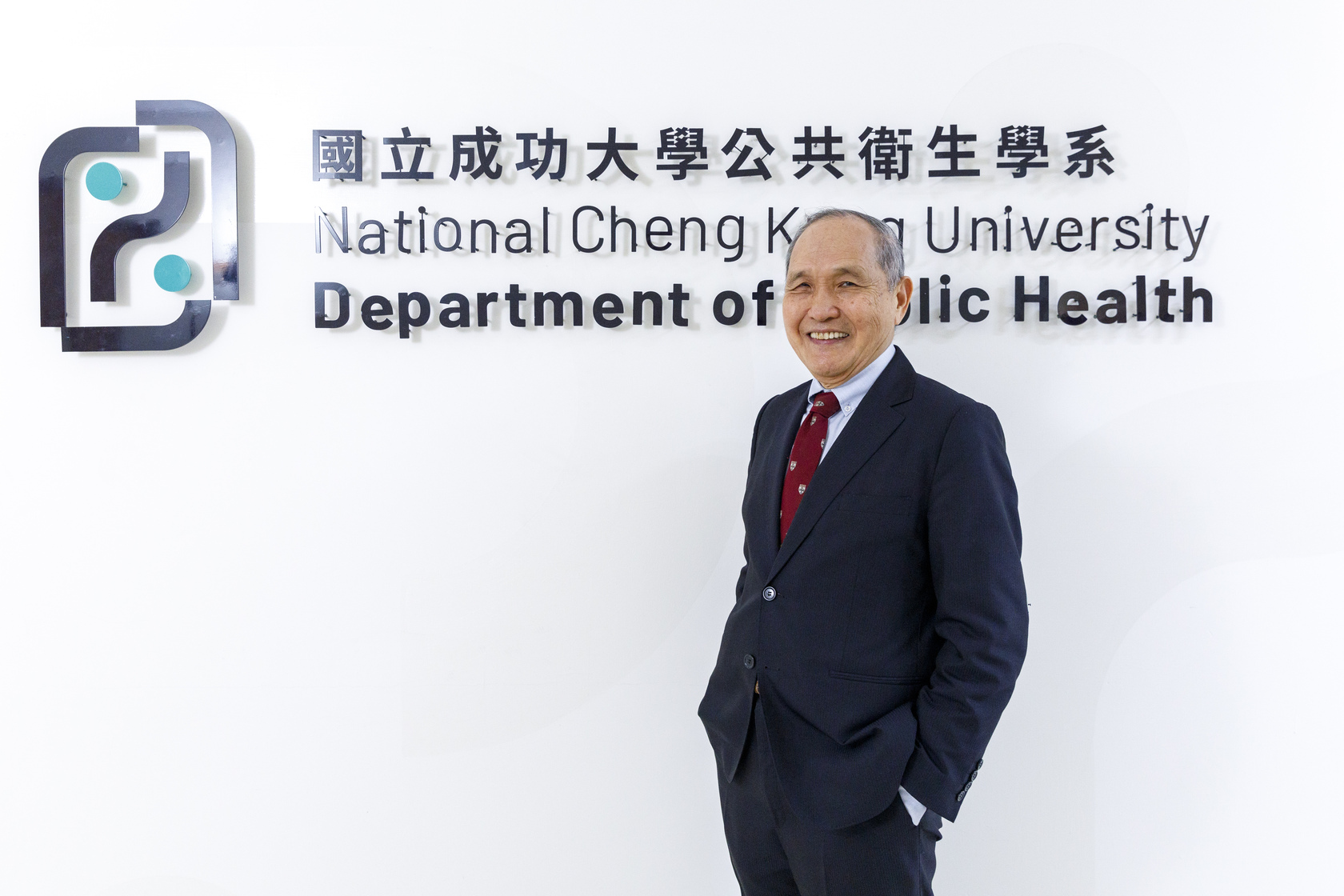
Jung-Der Wang Chair Professor Emeritus
National Cheng Kung University
Individual Category
The Architect of Occupational Medicine: Jung-Der Wang’s Journey to a Healthier Taiwan
Professor Jung-Der Wang has spent decades shaping Taiwan’s occupational medicine and public health policy through rigorous, evidence based research. His work spans occupational disease prevention, environmental health, and the efficient and fair allocation of National Health Insurance (NHI) resources — all grounded in real-world data analysis to generate evidence and built through collaboration across disciplines. He has helped move Taiwan from a period of neglect to a system built on research, institutional support, and greater public awareness.
A leading figure in Taiwan’s occupational medicine, Jung-Der Wang has spent more than 40 years advancing the field from its early stages into a well-established national system. In 1978, he moved from clinical practice into occupational and public health, turning his attention to the effects of shift work, dusts, gases, and vapors, and chemical exposures on workers. As Taiwan’s economy expanded rapidly through those decades, his research helped lay the groundwork for protecting both the workforce and the broader public.
In the 1970s, Taiwan’s rapid economic growth masked a serious neglect of workplace safety. The Philco-Ford electronics tragedy—in which several young female workers died from acute liver toxicity—became a national flash point. A scientific debate followed. Experts disagreed on whether the cause was exposure to trichloroethylene and tetrachloroethane, or a combination of these solvents with viral hepatitis. Because the evidence remained inconclusive, the case was never fully resolved. Even so, the crisis prompted major policy changes. It led to the passage of the 1974 Labor Safety and Health Act and, in 1976, the introduction of governmentfunded scholarships to support the study of occupational medicine.
A Fateful Question: Finding Resolve in the Gospel of Matthew
A graduate of National Taiwan University’s College of Medicine, Jung-Der Wang was working as an internal medicine resident at NTU Hospital when his career reached a turning point. In 1977, he received a government scholarship to study immunology abroad. But while completing the paperwork at the Ministry of Education, a chance question from a division chief changed everything.
"Why not switch to occupational medicine?" The chief’s question was driven by necessity: the previous candidate had lasted just one week. The field was considered obscure, talent was scarce, and the need was urgent. Wang hesitated — but his faith gave him direction. Guided by a passage from the Gospel of Matthew, "Whatever you did for one of the least of these……you did for me," he and his wife felt called to serve the most vulnerable. With her support, he left for Harvard to train in what was then a largely neglected field in Taiwan. What began as a step into the unknown would eventually establish him as a leading figure in Taiwan’s occupational health system.
Wang recognized that while few chose this path, it was essential for Taiwan. He knew the work would involve navigating labormanagement tensions and corporate secrecy, yet he took on the challenge.
Even so, Harvard made the scale of the task impossible to ignore. Taiwan’s understanding of occupational health was still rudimentary, and Wang knew that pushing for change at home would not come without resistance.
At a time when Taiwan had no formal framework for occupational safety, Jung-Der Wang recognized that protecting workers required an institutional system— one that industry players could actually follow. Within the first four years of his return, he identified eight distinct occupational diseases. Remarkably, in five of these cases, neither workers nor factory owners were aware of the toxic components in the materials they handled daily. At the time, the medical community remained largely unaware of industrial health, with most physicians associating occupational illness primarily with coal miners and pneumoconiosis.
One striking case involved the wife of a chromium plating plant owner, whose nasal septum had worn through entirely. The owners could not explain the cause, let alone find a remedy. Yet uncovering the source of such conditions proved far more difficult than treating the patients themselves. "Industrial processes were closely guarded as trade secrets," Wang says. "Gaining access to factory floors and persuading owners to change their manufacturing practices was a constant struggle."
Pioneering MSDS and Industrial Reform
When talking with factory owners, Wang made it clear that his role was to identify etiological agent(s), improve working conditions, and not assign blame. “I needed to understand their operational pressures,”he says. “The focus was on solving problems and improving safety, rather than criticizing them for putting workers at risk.”
Wang maintained that preventing occupational illness in Taiwan was not simply a matter of clinical staffing, but of building the right systems. The missing link was a standardized approach that made industrial chemicals traceable, manageable, and linked to diagnosable health outcomes. To address this gap, he championed the Material Safety Data Sheet (MSDS) system as a baseline for industrial compliance.
Faced with widespread corporate secrecy, Wang moved forward by building an ind ependent occupational disease database from the ground up. He adopted a rigorous scientific approach— formulating hypotheses about potential toxins and systematically testing them to identify the true causes of illness. This evidence-based method became the foundation for his push for a nationwide MSDS mandate. He also promoted greater transparency through the use of product life cycle analysis tied to international quality and environmental certifications, such as ISO 9000, ISO 14000, and ISO 45000 series. As market demand grew and sustainability became a priority, industries gradually shifted toward manufacturing processes that were both safer and more environmentally responsible.
The shift was a collective effort involving the Ministry of Economic Affairs, labor inspection bodies, and numerous researchers. At the same time, Wang wrote a regular column for Health World magazine to explain key concepts and developed educational materials for the Ministry of Education on recognition and prevention of environmental toxins. Over time, both government and industry began to respond.
Outpacing Japan:A Rapid Response to EU Mandates
The 1984 Bhopal disaster in India—a catastrophic gas leak that ultimately left hundreds of thousands dead or injured—served as a stark warning to the world. Determined to prevent a similar tragedy in Taiwan, Shou-Bo Zhao, then head of the Labor Inspection Institute, mobilized expert teams to overhaul chemical management across the country’s pesticide plants.
At the same time, the Ministry of Economic Affairs established the Safety and Health Technology Center at Industrial Technology Research Institute (ITRI), led by scholars Shu-Wei Yu and Rong-Bin Yu, to strengthen industrial safety. The Executive Yuan later established the Environmental Protection Bureau, where Chun-Chang Li championed the Toxic Chemical Substances Control Act, extending protections from the factory floor to surrounding communities.
After eight years of advocacy, the legislation was enacted in 1993, prompting industrywide compliance and raising chemical management and safety standards across Taiwan. Reflecting on this period, Wang recalls the many experts and researchers who made the bill possible. “Japan did not pass comparable laws until 1998,”he says.“Taiwan was clearly ahead.” This early foundation proved decisive in 2006, when the European Union introduced its REACH (Registration, Evaluation, Authorization and Restriction of Chemicals) regulations, allowing Taiwanese industry to respond quickly to the new global requirements.
Beyond industrial safety, Wang also addressed broader environmental risks. He co-authored influential research on pediatric lead exposure with MIT-educated Dr. Rabinowitz. Their work established a link between lead exposure and impaired cognitive development, setting new safety standards for infants and children. This discovery helped accelerate Taiwan’s move to introduce unleaded gasoline. Wang later found that lead could be absorbed through the skin, which also shed new protection light in the field.
As the occupational medicine system matured, Wang turned his attention to the sustainability of the National Health Insurance (NHI) system and long-term care systems. His approach centered on two ideas: The first one is preventing catastrophic illnesses and their complications before they occur. The other is applying health technology assessment across the full spectrum of healthcare—from prevention, diagnosis & treatment, rehabilitation, and care support to improve both cost-effectiveness and equity.
Valuing Health Expectancy: A Scientific Reframing of Healthcare Allocation
To this end, Wang devoted himself to building data-driven models to project life expectancy, costs, and productivity—work that helped shield the country from billions of direct and indirect losses. He often pointed to long-term intubation patients as a cautionary example: while life can be medically prolonged, the lack of patient recovery would often leave families facing high out-ofpocket costs for care and medical supplies.
To better quantify these burdens, Wang collaborated with Academia Sinica’s Dr. Jing Shiang Hwang to develop survival functions that underpin projections of lifetime NHI expenditure and patients’ out-of-pocket expenses.
In parallel, NTU Professor Kai-Ping Yao helped adapt the WHO Quality of Life scale to the Taiwanese context. This marked a shift from a focus on life expectancy to “healthy life expectancy” (HLE), ensuring that medical decisions better reflect the real impact of illness on individuals, families, and society.
These models fed directly into policy. HuangHsiung Huang, a commissioner at the Control Yuan, drew on this research and, working with Dr. Sheng-Jean Huang, advanced two legislative reforms on terminal extubation, allowing patients to die with dignity while easing the burden on families. Beyond end-of-life care, this data-driven approach has enabled the NHI to direct resources where they are most needed.
Together with Dr. Chi-Tai Fang, who joined the team during the AIDS epidemic, we analyzed real-world data from the Taiwan Centers for Disease Control (CDC). In 2004, we proposed that universal free treatment was the most effective way to control AIDS— a conclusion later supported by a decade of clinical evidence from randomized controlled trials.
“Taiwan’s National Health Insurance is more than a vehicle for universal healthcare,” Wang says.“It is a fundamental pillar of industrial stability and economic growth.” He remembers the pre-NHI era clearly: families abandoning treatment they could not afford or selling their homes for a chance at survival that rarely came. By absorbing these catastrophic costs, the NHI freed up household income and quietly supported broader economic activity.
For Wang, the credibility of this work rests entirely on data. Whether investigating occupational hazards or evaluating healthcare models, he has consistently submitted his research to international peer review because he believes evidence that shapes national policy must withstand global scrutiny.
Innovation in Labor Health: Sustaining National Economic Vitality
Because illness erodes labor productivity and, in turn, the broader economy, traditional metrics have often focused solely on the lost wages of those who died before age 65. The economic impact of reduced working capacity during chronic illness remained largely unmeasured. Wang, working with NCKU economics professor Fuhmei Wang, used NHI wage data to model productivity loss associated with serious acute and chronic conditions, enabling early intervention that preserves health and helps prevent labor decline.
This approach has yielded significant benefits for patients diagnosed early with renal disease, colorectal cancer, and breast cancer. The impact is also striking for people living with human immunodeficiency virus (HIV): early treatment adds 8.3 healthy life years compared with latestage intervention, allowing individuals to remain active in the workforce.
Wang often says he hasn’t invented anything new—he’s uncovered value that was already there, buried in existing data and medical knowledge. Whether in occupational health, risk analysis, or NHI modeling, his philosophy is consistent: by grounding inquiry in empirical data and applying evidence thoughtfully, the solutions can often emerge—ones that help improve systems and serve the public good.
Over the decades, Wang’s team’s work has become a valuable resource for both medicine and industry. It has provided a scientific basis for labor protection, helping convince companies of the long-term value of preventive safety and stronger institutional systems. By using NHI data to support human dignity and promote more equitable resource allocation, his research has contributed to meaningful social change.
Looking to the next generation, Wang stresses that in the age of AI, algorithms are tools; what matters most is asking the right questions. He believes innovation becomes a force for real change only when people are willing to challenge boundaries, think across disciplines, and remain aware of the human lives behind the data.
Mantra for Success
- He began his career in occupational medicine, dedicating decades to labor health, environmental exposure research, and disease prevention. By helping establish Taiwan’s occupational medicine system, he identified and documented a range of previously “invisible” industrial and environmental illnesses. His work brought these overlooked risks to light and integrated them into national policy and institutional practice.
- He applied data and evidence-based research to improve institutional systems. From advancing the Material Safety Data Sheet (MSDS) system to developing data-driven models for lifetime health outcomes, he turned complex workplace and healthcare challenges into practical decision-making tools.
- He extended his work beyond academia by engaging directly with industry. Through on-site investigations of more than 100 factories, he helped reduce exposure risks and brought Taiwan’s safety standards closer to global norms, strengthening the country’s export competitiveness.
- He placed human dignity at the center of medical research. His work spans from the introduction of unleaded gasoline and the protection of child health to support for cancer screening, universal HIV treatment, and the removal of toxic Aristolochiaceae from Chinese herbal medicines. Together with his reforms in NHI resource allocation, this body of work has become a valuable resource for both medicine and industry—continuously safeguarding lives, easing the burden on families, and supporting social welfare and economic development.
得獎感言
I don't see my success as a reflection of my own talent. It's about answering a calling and following a mission, one step at a time. I don't have the faith of Abraham, who believed in a future he would never see. But God has been kind enough to let me see some positive results of my work while I am still here, and that progress is what keeps me moving forward.
Picture list
- Date of announcement:2026/06/01
- Last updated: 2026/07/22
- Views:84