
The 6th R.O.C. ( Taiwan )Presidential Innovation Award Report_Group Category_ZECZEC CO., LTD.



ZECZEC CO., LTD.
Group Category
Crowdfunding Ignites the Potential for Innovation with 1,800 Proposals Each Year
As a trailblazer in Taiwan's crowdfunding scene, Zeczec Co., Ltd. not only offers a platform for showcasing creativity and products but also a nexus for creators and entrepreneurs to engage directly with backers and supporters. With its transparent fundraising guidelines, robust business infrastructure, and analytical approach to marketing data, Zeczec attracts more than 1,800 proposals yearly from small and medium enterprises, startups, and designers in sectors like retail, environmental protection, publishing, and social innovation. Amassing over 3.8 million backers, Zeczec unlocks opportunities far beyond conventional investor channels.
n May 2024, updated records on the Zeczec platform reveal three impressive figures: over NT$12.9 billion (~US$400 million) from one-time pledges, more than NT$140 million (~US$43.5 million) from subscription-based pledges, and a cumulative total of 4 million backers.
In August 2023, the platform's co-founder, Quake Hsu, held a press conference to announce that Zeczec had received NT$10 billion in pledges. The data demonstrates a consistent upward trend in the crowdfunding market, maintaining its growth even after a sharp spike during the COVID-19 pandemic followed by a period of normalization.
Since its inception in 2012, Zeczec has been at the forefront of crowdfunding in Taiwan, growing to become the country's largest crowdfunding platform. For over a decade, Zeczec has shaped fundraising trends and facilitated the creation of unique products and exceptional experiences by consistently enhancing commercial trust. Successful fundraising enables backers to receive pre-order rewards and contribute to creating positive outcomes; if a campaign fails, the pledged funds are fully refunded, minimizing the risk for project creators.
Crowdfunding first gained traction as an alternative funding source for those struggling to secure capital, particularly after the global financial crisis, when traditional financing avenues became increasingly conservative. Over time, the commercial value of crowdfunding has become apparent not just in fundraising, but also in market risk assessment. "Crowdfunding serves as a rational market survey that uncovers true market demand by identifying who is willing to pay for a product," Quake Hsu explained. "This enables creators and entrepreneurs to gauge market response beforehand, helping them steer clear of uninformed production."
Remote Work: Task Assignment in a Flat Organizational Structure
In the early 2010s, when crowdfunding was a relatively novel concept, Quake Hsu and his colleagues had to scour various startup incubators across Taiwan to seek project proposals. A decade later, the situation has completely reversed. Today, the platform receives over 1,800 proposals annually, spanning various themes and diverse areas. To this day, Hsu still dedicates 10% of his time to actively exploring interesting projects and identifying intriguing proposals, ensuring the crowdfunding platform remains diverse and dynamic, rather than homogeneous.
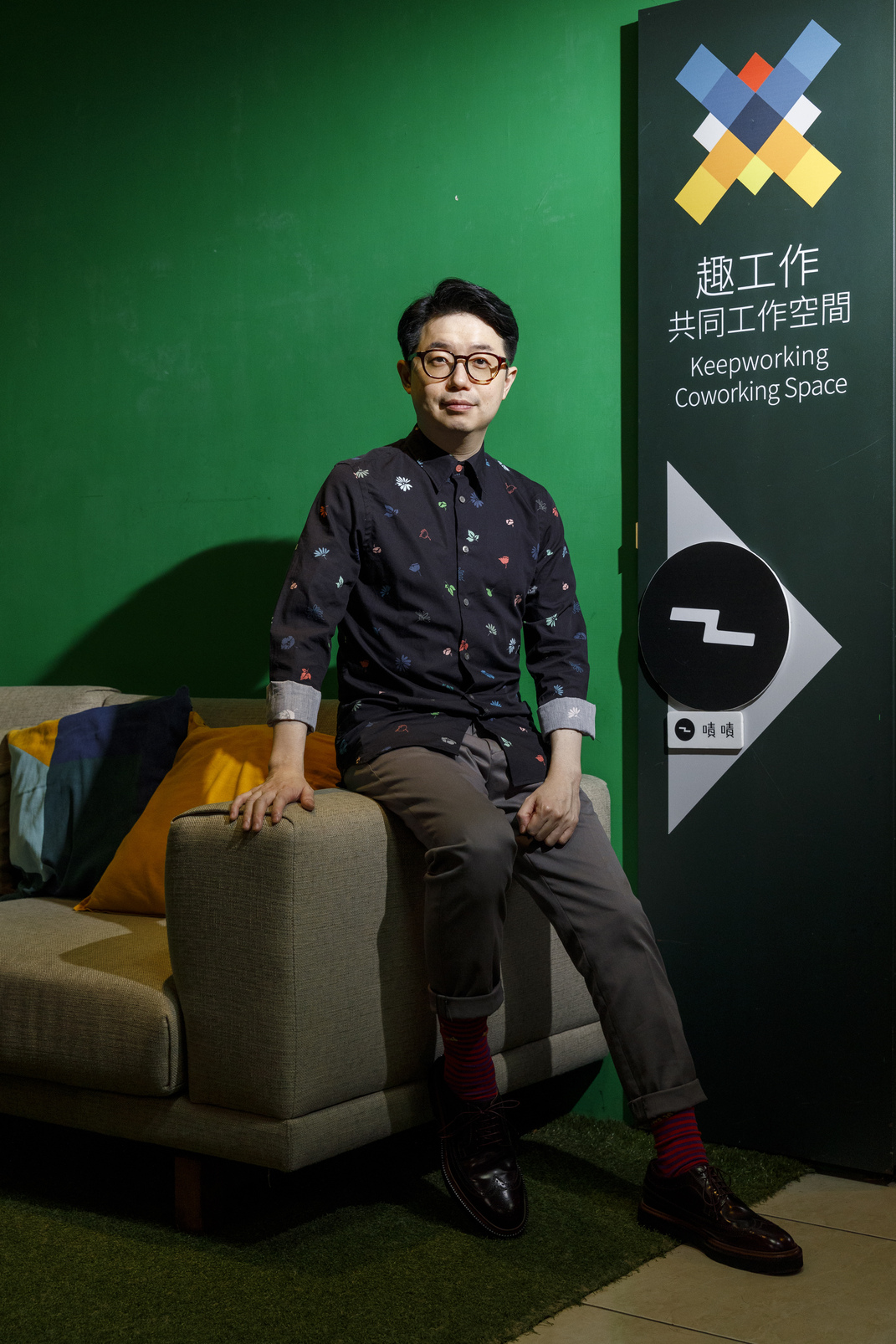
Zeczec embraces a fully remote work model, a practice that originated from Hsu's needs when he started the business. "In 2012, I was still working in the UK as an architect while running this part-time business in Taiwan. Due to geographical and time differences, colleagues from both locations had to collaborate online. This marked the beginning of our remote work model."
This model has naturally attracted talent who value flexibility and possess a high degree of selfdiscipline. Despite growing to nearly 50 employees, the company still operates without a fixed office, using shared spaces in startup clusters and renting meeting rooms and private booths as needed. Among them, more than half of the employees are proposal managers (PMs) who work remotely based on the location of the proposals.
On the other hand, it operates with a flat, functional structure consisting of groups such as project management, quality control, and website development/maintenance. Instead of traditional hierarchical management positions, it encourages active participation from all members. "We primarily use task grouping, selecting individuals from various core functional groups to form teams that advance business plans. Once the task is completed, the team disbands, and members return to their respective functional groups," Hsu explained. "Most new colleagues are brought in through internal referrals rather than open recruitment, with the hope that they will come with a sense of alignment with the company's culture and values."
Zeczec also highly values individual attributes. Each PM brings their unique persuasive skills—some excel in public speaking, others are adept at organizing data, and some have a strong ability to empathize and listen. Hsu takes these personality traits into account when assigning projects.
If the proposer is an efficient boss, it's better for us to present key data succinctly rather than rely on someone eloquent but long-winded. Conversely, if the proposer shares a pitch with profound stories, colleagues who are empathetic and patient listeners are the ideal candidates. As a matter of fact, matching the right skills to the task significantly impacts the success of a proposal."
Four-Stage Proposal: Dedicated PM on Standby
"Humans cannot create entirely new things out of thin air. Innovation requires ample information and life experiences. The primary reason crowdfunding can drive innovation is due to the abundance of proposal resources." Quake Hsu stated plainly, "We communicate with over 1,800 proposers each year, effectively studying the same number of cases. Behind every proposer, there are unique elements, whether related to the industry or the product. The Zeczec platform is able to innovate thanks to the many proposers who provide us with rich materials and experiences to learn from and reference.
At Zeczec, proposals must meet specific criteria: the proposer must be a citizen of Taiwan; pre-order products must be launched in Taiwan first; and if the proposal involves global fundraising, the product must also be launched globally.
A fundraising campaign is divided into four stages: preparation, pre-heating, launch, and feedback. The first stage, preparation, involves assessing feasibility. Zeczec assigns a proposal manager to act as a 1-on-1 coach for the project and, if necessary, invites professionals from relevant fields to provide consultation. Hsu remarked, "This is what sets us apart, providing the early support that Taiwanese proposers truly need."
Reviewing is like a persuasive confrontation process; it is also a collaborative effort by both parties to refine the proposal. Anyone seeking crowdfunding must first ask themselves: Do I have the technical ability, experience, and team manpower necessary to realize this idea? During the preparation period, it is also crucial to evaluate the actual funding needs of the proposal to avoid inaccurate estimates due to lack of experience.
The second stage is the pre-heating. Before going live, a fake door test is conducted to allow the proposer to adjust the page materials and design, generating buzz for the actual launch. The pre-heating strategy leverages the psychological principle of herd mentality to create a "crowd effect" online. Zeczec uses social media to attract potential backers to upcoming project launches in advance. Through survey advertisements, they engage these backers in selecting project promotional materials and providing price suggestions, thereby increasing their anticipation and involvement in the project.
During the pre-heating stage, proposers can gather specific consumer opinions and tweak their product or marketing strategy accordingly. Hsu stated, "The pre-heating stage not only generates essential buzz but also establishes a direct and close connection between the proposer and the backers, which is a crucial step for a project's success."
The third stage is the official launch, where attention is drawn through visual materials, and the goal is to achieve the fundraising target within the specified time frame. The final stage involves producing the product or reporting on the progress of activities after successfully raising the funds. This stage is often overlooked, but it is crucial for maintaining the trust and support of backers.
Effective Crisis Management: A Pillar of Trust
In business, nurturing repeat customers is essential. Crowdfunding platforms also value repeat project proposers. However, after one proposal cycle ends, when the same proposer pitches a new project, the fundraising results can vary significantly.
Quake Hsu observed, "Successful proposers are often perfectionists." They are uncompromising about production defects and will honestly inform the backers, proposing a solution without delay or avoidance. Once backers accept their crisis management approach, most will continue to support them—not just for this project, but also for future campaigns from the same proposer.
A prime example is uanuan, initially known for its stainless steel cutlery. "No matter how well we plan and prepare for crowdfunding proposals, there are always uncertainties and what we call shipment risks," said James Wang, uanuan's creative director. "But by maintaining a sincere attitude and approach to communication, we have gained the understanding and support of substantial backers."
Wang shared his experience, highlighting that production challenges include scheduling and technical issues, as well as unforeseen external factors like equipment delays caused by the pandemic. To mitigate risks, they do their best to open more molds and engage multiple suppliers to ensure the stability of the production process as much as possible. "Even so, when production hiccups occur at the factory, we always clearly communicate our resolution plan to the backers. If we sense that they are unwilling to wait or are concerned about the delay, we'll advise them to cancel their order. This is our commitment to responsibility."
Millions NTD Raised: Launching an Original Epic Board Game
After ten years of refinement, Zeczec has evolved into more than just a channel for capital aggregation. It now plays a crucial role in market testing and risk assessment, which is especially important for early-stage creative or entrepreneurial projects. KJ Chang, the founder of Mizo Games, lauds the multifaceted support provided by the crowdfunding platform.
Starting in 2017, Mizo Games successfully raised NT$14.55 million (~US$ 450,000) over three consecutive years for their original historical board game series, Raid on Taihoku: Epic Collection, on Zeczec. This game is themed around the air raids of three cities in Taiwan (Taipei, Kaohsiung, and Keelung) during World War II. Despite tabletop games and crowdfunding being niche markets at the time, it achieved extraordinary success.
Chang, a self-proclaimed history buff, founded a local board game development team in 2016. Back then, the market for original games was small and prices were low, but he chose to develop a largescale, elaborate game from the outset. This decision led to higher costs and larger print runs, prompting him to seek funding and marketing channels on crowdfunding platforms.
Since players could not physically see the game, Chang placed special emphasis on effectively conveying the design concept to attract backers' attention. He took several unconventional steps, including securing the rights to use the song Defenders of Bú-Tik Palace by the band CHTHONIC. He used this song in the teaser trailer of the board game and in a crowdfunding preview trailer that resembled a music video, simply because the song's vibe matched the game's theme. Not to mention, all the buildings from the Japanese colonial era featured in the board game were meticulously hand-drawn by artists. These expenses were virtually unheard of in Taiwan's board game industry.
In the past seven years, every Mizo Games project has chosen to raise funds and market on Zeczec. "This platform has built a community of people who believe in startups, are willing to give opportunities, and are curious about new things," Chang concluded. "For many board game buyers or distributors, seeing our board game on Zeczec instills confidence in them; for us, it's become a natural process for launching a new product."
Welcoming the Tiger God at a New Temple & Transforming Century-Old Flower Tiles into Calendars
Moreover, Zeczec's cumulative three million plus backers are themselves a significant driving force. This support has been crucial in advancing crowdfunding cases for cultural assets or social issues that require substantial funding.
Quake Hsu, who is professionally an architect, highlighted a particularly intriguing case. Due to urban planning, the Wufu Temple in Luzhou was demolished. After many years, the temple managed to raise enough funds to purchase a narrow plot of land near the community park. However, there were still insufficient funds to build a new temple to welcome back the Earth God and Huye (Tiger God). After receiving divine approval through the casting of lots, Zeczec launched a three-stage fundraising
campaign to build the temple and successfully raised over NT$17 million (~US$530,000) to begin construction. Following media coverage of the project, the number of supporters surged from nearly two hundred to over two thousand. The proposal and reward items all received approval from the Earth God before production commenced.
One noteworthy aspect is that the construction team for this local temple incorporated modern architectural elements into the renovation, such as varying column heights and an exterior that distinctly differs from traditional temples, offering worshippers and visitors a fresh impression. The proposer maintained the traditional practice of commemorating donor names, but shifted this from the walls to the floor tiles, effectively blending new and old cultural elements.
Meanwhile, at Zeczec, we also observe cultural creatives breaking traditional molds and utilizing crowdfunding to drive ongoing innovation in cultural assets. The Museum of Old Taiwan Tiles is one such example.
The Museum, founded by a group of dedicated individuals who invested over 20 years of their youth and savings, professionally restores and repairs over 10,000 pieces of century-old flower tiles found in people's ancestral homes. The Museum offers free admission and requires stable, continuous funding for its operations. Consequently, they turn to Zeczec to seek financial support.
In 2020, the Museum began by selecting two flower tiles, which they remade into threedimensional hand-painted pieces. This campaign resonated with over 3,000 people, helping to raise more than NT$5 million (~US$155,000) in funding. These reborn flower tiles were imprinted with a serial number and engraved with a name specified by the backer, potentially serving as a family heirloom. That campaign was a success, but it also prompted the Museum to consider more sustainable practices: "If culture is merely preserved, it will eventually fade; only by integrating culture into daily life can it endure." The creation they realized is the exquisite Taiwan Tiles Calendar.
In 2022, the Museum applied an intellectual property mindset to select 365 pieces from a database of tens of thousands of flower tiles and transformed them into a beautiful calendar. The campaign raised over NT$10 million (~US$310,000) with more than 6,000 backers. The calendar features information, such as the name of the tile, the year of production and origin, and the meaning of the pattern, effectively making it a tile visual book. It serves both as a research tool and a source of creative inspiration.
In addition to receiving excellent reviews, the Museum continued to inject new vitality into old tiles by releasing the 2024 edition of the calendar. The campaign still attracted over NT$10 million in crowdfunding and was supported by over 6,000 backers. This edition features a variety of patterns and color schemes, sometimes aligned with solar terms, sometimes with festivals or moods. The colors of the flower tiles are used as the background for the calendar, highlighting the beauty of glaze colors from a century ago.
International Brands Pilot and Test Potential Products
In 2022, Zeczec was approached by a Korean home appliance brand about potential collaboration opportunities. Some agents had no intention of introducing certain products, prompting the brand to explore using the crowdfunding platform as a way to give well-designed products a chance to shine. Quake Hsu saw this as an opportunity to develop new clients: "When a brand's customer base comes to Zeczec, they might explore other proposals on the platform, inadvertently increasing the likelihood of further engagements."
In 2022, Zeczec was approached by a Korean home appliance brand about potential collaboration opportunities. Some agents had no intention of introducing certain products, prompting the brand to explore using the crowdfunding platform as a way to give well-designed products a chance to shine. Quake Hsu saw this as an opportunity to develop new clients: "When a brand's customer base comes to Zeczec, they might explore other proposals on the platform, inadvertently increasing the likelihood of further engagements."
Furthermore, the two parties collaborated again at the end of 2023 on a new product that combined a vacuum cleaner with a floor-sweeping robot. Interestingly, this product was the winning entry in an internal design competition at LG, but it never actually went into mass production. Although it was launched on a crowdfunding platform in South Korea, the results underperformed.
Unexpectedly, it garnered much better results on Zeczec, raising nearly NT$6 million (~US$187,000) and receiving excellent reviews, demonstrating a stark contrast in market response between the two locations. Taiwan was the first market to globally launch this product, which later became available on the official LG online store, bringing this well-designed product into the spotlight.
Future Outlook: Creating a Fundraising Industry Ecosystem
Zeczec's next goal is to raise a cumulative total of NT$20 billion pledges (~US$623 million) by 2026. How can this momentum be extended to a broader vision on the existing foundation? Quake Hsu envisions a crowdfunding ecosystem.
The crowdfunding market has evolved from its early stages, with platforms, proposers, and backers now attracting more participants, including marketers, consulting firms, advertising service providers, and key opinion leaders promoting crowdfunding. These participants are collectively building the crowdfunding ecosystem, with the platform's role being to provide volume and economic scale to support it.
Additionally, Zeczec is considering promoting the products and services proposed in Taiwan to the international market. They noticed that certain foreign products, once localized in Taiwan, received crowdfunding support several times higher than in their home countries. Consequently, they have begun researching how to bring Taiwanese products to the international market through platforms like Kickstarter, Indiegogo, and crowdfunding platforms in Japan and South Korea.
In August last year, when Zeczec announced its cumulative pledges had surpassed NT$10 billion, it also revealed plans to establish an early-stage venture capital fund. This fund will focus on three major directions: originality, Taiwanese culture, and local industries, showcasing its commitment to innovation and development.
"From a venture capital and fundraising perspective, crowdfunding is not a process from 0 to 1, but rather from 0.1 to 1," said Hsu. The reason for this is that our review standards require functional prototypes, not just graphic design drawings. Before a project goes online, it must pass through the planning and early development stages with verifiable models. These stages require funds and resources."
It is unfortunate to see many proposals exhaust their resources or be deemed too high-risk in the early stages, forcing them to terminate. Therefore, Zeczec combines its own project service experience with the support of partners who share the same values to establish an early-stage fund. "The goal is to provide more opportunities for proposers from different industries, helping them overcome the challenges of creating functional prototypes and generating valuable and innovative ideas." A fundraising platform must continually introduce new elements. This is crucial for maintaining Zeczec's vitality and fulfilling its mission.
Mantra for Success
- By continuously strengthening its business models, it has driven the fundraising trend in Taiwan. Successful fundraising enables backers to receive pre-order rewards and contribute to creating positive outcomes; if a campaign fails, the pledged funds are fully refunded, minimizing the risk for project creators.
- A fundraising campaign consists of four stages: preparation, pre-heating, launch, and feedback. It has dedicated proposal managers (PMs) in place to assist the proposer in reviewing their technical expertise, experience, and feasibility of manpower, and in setting an appropriate funding amount.
- Before going live, a fake door test is conducted to allow the proposer to adjust the page materials and design, generating buzz for the actual launch. This process also gathers specific consumer opinions, enabling the proposer to tweak their product or marketing strategy accordingly.
- After the official launch, attention is drawn through visual materials, and the goal is to achieve the fundraising target within the specified time frame.
- After successfully raising funds, the platform's quality management system is used to track the progress of the proposer's product shipment or activities. If unexpected problems arise, the PM collaborates with the proposer to openly communicate and propose solutions, aiming to gain the understanding and support of backers.
得獎感言-ZECZEC CO., LTD. Quake Hsu
Crowdfunding in Taiwan is continuously innovating, fueled by an abundance of proposals that bring forth interesting, meaningful, and valuable projects on a consistent basis.
Picture list
- Date of announcement:2024/12/02
- Last updated: 2026/07/22
- Views:136